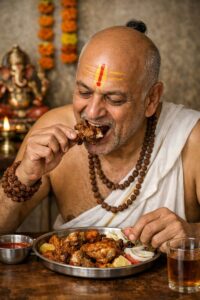
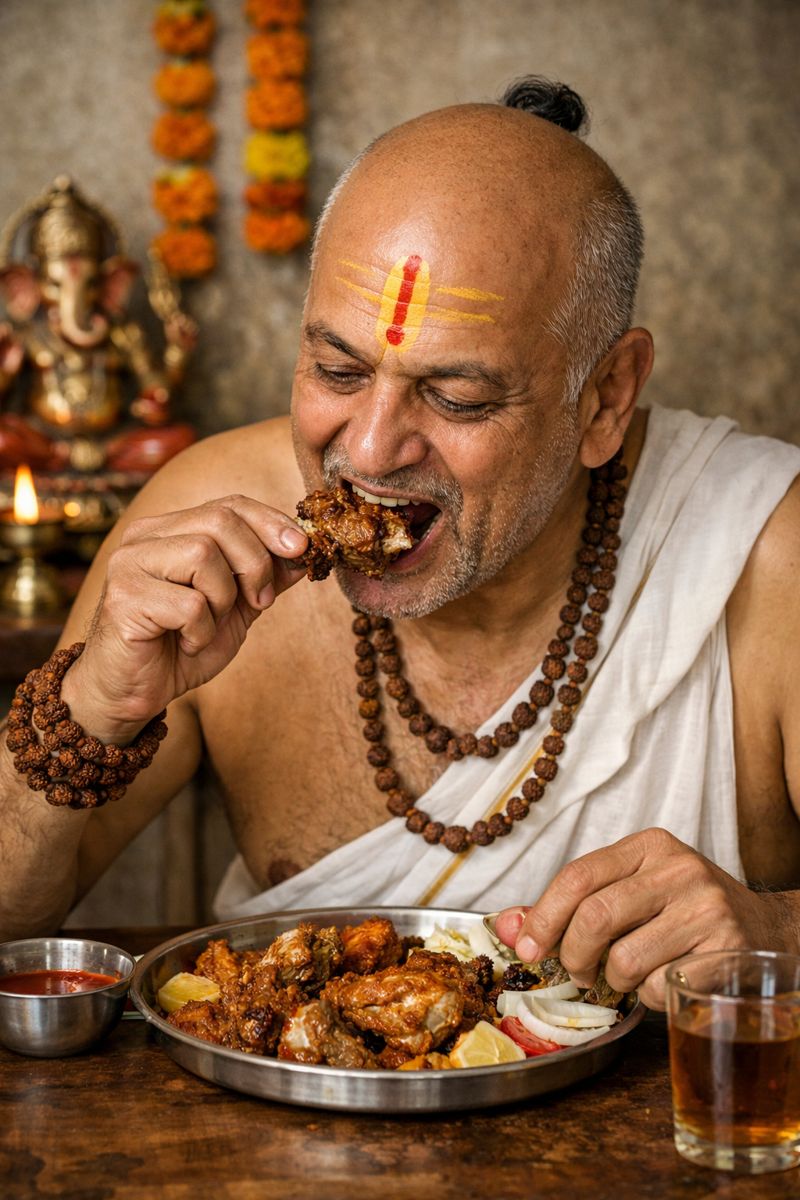
Is eating non-vegetarian food contrary to Hindu culture?
Clear answer: No, no matter what the flag-bearers of religion may say. On the contrary, thousands of examples from the Vedas, the Ramayana, and the Mahabharata can be cited that support the historical presence of non-vegetarian consumption in Hinduism. Countless examples are available. To avoid testing the reader’s patience, I am presenting only ten examples from each corpus.
Examples from the Vedas
Ṛgveda 10.86.14
संस्कृत
इन्द्राग्नी इमं सुवीरं पशुं मे
जुषेथां यज्ञे मधुपेयमुग्रम् ।
English translation
O Indra and Agni—accept this sacrificial animal; in the yajña it has been offered as a powerful and sweet sustenance.
Ṛgveda 1.162.2
(Description of animal offering in the Ashvamedha)
संस्कृत
अश्वं नयन्ति हविषो वसायं
प्रजापतिः प्रैषो यजमानमीयात् ।
English translation
The horse is taken as an oblation for the sacrifice; by Prajāpati’s command the sacrificer performs the offering.
Ṛgveda 1.162.19
संস্কृत
इदं तस्य त्वचं पर्वतानां शिरो यच्छन्ति देवताः ।
English translation
The skin and the head of the sacrificed animal are offered to the deities.
Ṛgveda 10.16.7
(Reference to “roasting meat” in sacrifice)
संस्कृत
अग्नेः पात्रे भस्मनः पिशङ्गं
मांसं पचन्त्यं हविषा विदद्रुः ॥
English translation
In the vessel of Agni, meat is cooked along with the sacrificial oblation—considered part of the yajña.
Yajurveda (Kāṭhaka Saṃhitā) 12.5
(Commonly cited instruction on animal offering)
संस्कृत
पशुं आलभेत यजमानो यथाविधि ।
देवाः पशून् पिबन्ति यज्ञेषु ॥
English translation
The sacrificer shall offer the animal according to rule; the gods partake of the sacrificial animal in the yajña.
Yajurveda 23.20 (Taittirīya Saṃhitā)
संस्कृत
अस्य मांसं देवाः प्राश्नुवन्ति ।
अस्य बलिं हविरध्वर्युरादधात् ॥
English translation
The gods partake of this animal’s meat; the Adhvaryu offers this sacrifice into the sacred fire.
Yajurveda 30.5
(Animal sacrifice)
संस्कृत
एषः पशुः प्रजापतये त्वा न्यच्छामि ।
मांसं ते देवा भुञ्जीरन् ॥
English translation
This animal I offer to Prajāpati; may the gods partake of its meat.
Sāmaveda 2.6.5
(Animal offering in yajña)
संस्कृत
पशूनां त्वा हविषां नियुतं वयं
त्रातारं देवयन्तो हवामहे ॥
English translation
O guardian of animal oblations in the yajña, we invoke you with devotion.
Atharvaveda 9.10.14
संस्कृत
यत्र पशून् आलभन्ते यज्ञे देवकृते नराः ।
तत्र हविर्भागमिच्छन्ति देवाः ॥
English translation
Where humans offer animals in sacrifice to the gods, there the gods desire their share of the oblation.
Śatapatha Brāhmaṇa 3.1.2.14
(The clearest statement on animal sacrifice and meat consumption in the Vedic age)
संस्कृत
अथ यः पशुं आलभते स देवानां भोजनम् कुरुते ।
तत् मांसं प्रजाः भुञ्जते देवयजनात् ॥
English translation
One who offers an animal prepares food for the gods; and people partake of that sacrificial meat, as it is part of divine worship.
Now to the Ramayana
Ayodhyā Kāṇḍa 52.102
संस्कृत
अरण्येषु च यज्ञानां पशून् संहन्ति भारत।
ततस्तैः बलिमादाय मांसं भुञ्जन्ति वै द्विजाः ॥
English translation
In the forests, animals are sacrificed for yajñas; from those offerings the twice-born consume meat.
Ayodhyā Kāṇḍa 94.22
(Bharata visiting Rama—diet of forest dwellers)
संस्कृत
फलमूलमयं देहं पश्य भुक्तं महावने।
मृगमांसनिषेवानां वने वसतां नृप ॥
English translation
O king, see the bodies of those dwelling in the forest—they live on fruits and roots as well as deer meat, and it shows upon them.
Rama’s instruction regarding forest life — Ayodhyā Kāṇḍa 103.6
संस्कृत
मृगमांसानि वैदेहि पच्यन्ते तव शोभने।
फलानि च बहून्यद्य संप्राप्तानि वनानि च ॥
English translation
O Vaidehī, deer meat is being cooked for you, and today many fruits have also been gathered from the forest.
Rama’s forest life — Araṇya Kāṇḍa 1.23
संस्कृत
न वेद वने रामो मृगमांसस्य दुर्लभम्।
अध्वरेषु च दत्त्वा स भुङ्क्ते मांसं यथाविधि ॥
English translation
In the forest, deer meat was never scarce for Rama; after offering it in sacrifice, he consumed the meat according to prescribed rites.
Diet of Rama and Lakshmana — Araṇya Kāṇḍa 2.17
संस्कृत
मूलानि च फलानि च मृगमांसानि चैव हि।
भुञ्जाते रामलक्ष्मणौ वने निवसतां सदा ॥
English translation
While living in the forest, Rama and Lakshmana always ate roots, fruits, and deer meat.
Livelihood of sages — Araṇya Kāṇḍa 1.10
संস্কृत
मूलमांसफलोपेतं वानप्रस्थाश्चरेद्वने।
एवं धर्मान्वितो नित्यं तपोवननिवासिनः ॥
English translation
Forest-dwelling sages sustained themselves on roots, fruits, and meat—this was their customary practice.
Rama introducing himself to Śūrpaṇakhā — Araṇya Kāṇḍa 17.39
संস্কृत
फलमूलमयं नित्यं मृगमांसं च भक्षयन्।
चरामि दण्डकारण्ये रामो दाशरथिर्मुनिः ॥
English translation
Living on fruits, roots, and deer meat, I wander in the Daṇḍaka forest—I am Rama, son of Daśaratha.
Part of Agnihotra — Bāla Kāṇḍa 14.34
संস্কृत
पशुं निराहार्य यजमानो यथाविधि
होत्रा मांसं ददात्यग्नौ देवतानां प्रशान्तये ॥
English translation
The sacrificer offers the animal according to rule; the priest offers its meat into the fire for the satisfaction of the gods.
Rākṣasas eating human flesh — Araṇya Kāṇḍa 51.29
(For cultural context: human flesh-eating is marked as “inhuman”)
संস্কृत
मांसभक्षणतृष्णांश्च मानुषाणां च भक्षिणः।
राक्षसान् पापरूचान् तान् हनिष्यामि न संशयः ॥
English translation
Those rākṣasas who devour human flesh are vile sinners—I shall surely destroy them.
Description of Jatāyu — Araṇya Kāṇḍa 51.10
संস্কृत
फलमूलमृगमांसानि च रामो ददर्श हि।
वने संयच्छमानानि लक्ष्मणेन समाहितम् ॥
English translation
Rama saw that Lakshmana had carefully prepared fruits, roots, and deer meat for their meal.
Now to the Mahabharata
Anuśāsana Parva 115.35
संস্কृत
न मांसभक्षणे दोषो न मद्ये न च मैथुनि।
भावनाभिरसत्त्वो हि दोषं पापं प्रचक्षते ॥
English translation
There is no sin in eating meat, drinking wine, or sexual union; sin is judged by one’s intention and disposition.
Anusasana Parva 115.47
संস্কृत
यज्ञेषु पशवो हन्यन्ते विधिना च यथाविधि।
अत्र दोषो न पश्यामि यथाशास्त्रमिदं कृतम् ॥
English translation
Animals are sacrificed in yajñas according to prescribed rites; I see no fault in this, as it follows scripture.
Anusasana Parva 116.8
संস্কृत
भक्ष्यं मांसमिहोक्तं हि देवैः प्रजापतिः स्वयम्।
सृष्टौ प्रवर्तयामास भूतानां पोषणाय च ॥
English translation
Meat was designated as food by Prajāpati himself for the nourishment of beings.
Anusasana Parva 115.40
संস্কृत
यज्ञशिष्टं तु यन्मांसं प्राश्नाति द्विजसत्तमः।
न तस्य दोषो भवति तदिष्टं देवताः स्मृताः ॥
English translation
A twice-born who eats the leftover meat of a sacrifice incurs no sin; the gods approve of it.
Forest diet of the Paṇḍavas — Vana Parva 37.12
संস্কृत
मूलानि फलमांसानि पाण्डवाः प्रतिभुञ्जते।
वासं कृत्वा महावनं तपो धर्मेण बिभ्रतः ॥
English translation
Living in the great forest, the Pāṇḍavas ate roots, fruits, and meat while leading an austere, righteous life.
Bhima’s diet — Vana Parva 11.9
संস্কृत
मृगमांसं सदा भुङ्क्ते भीमो वनचरः सदा।
बलेन चोपपन्नोऽसौ नित्यं युद्धेषु पार्थिवः ॥
English translation
Bhīma, dwelling in the forest, always ate deer meat; endowed with great strength, he excelled in battle.
Sacrificial animal offerings — Śanti Parva 262.7
संস্কृत
पशुष्वाहृत्य विधिवत् होमयित्वा द्विजोत्तमाः।
देवतानां प्रसादाय मांसं ददति यज्ञिषु ॥
English translation
After offering animals properly in sacrifice, the twice-born present meat in yajñas to please the gods.
Yudhiṣṭhira’s question — Anusasana Parva 115.7
संস্কृत
न हि मांसस्य मांसत्वे दोषो विद्यति भारत।
भावनायां तु यः पापो मन्यन्ते तत्त्वदर्शिनः ॥
English translation
There is no sin inherent in meat itself; sin lies in the intention behind the act, say the wise.
Quotation from Triśaṅkhu Smṛti — Anusasana Parva 116.28
संস্কृत
पूर्वं सर्वे द्विजातीनां भक्ष्यमासीत् सदा मांसम्।
न ततः पापम् आहुः हि धर्मज्ञाः सततं बुधाः ॥
English translation
In ancient times, meat was a common food among all twice-born; the learned saw no sin in it.
Prohibition of human flesh — Vana Parva 199.18
संস্কृत
नरमांसं न भुञ्जीत न तद् दद्याद् कथञ्चन।
अमानुषं हि तत् खाद्यं पापं पापस्य कर्मणः ॥
English translation
Human flesh must never be eaten or given to anyone; such consumption is inhuman and a grave sin.
Now to the Puranas: 10 reliable verses related to meat
Viṣṇu Purāṇa 1.6 — Animal sacrifice in creation
संस्कृत
यज्ञार्थं पशवो जाताः प्रजापतिरथाब्रवेत्।
तस्मात् यज्ञेषु ते हन्तव्याः नान्यथा भारत॥
English translation
Prajāpati declared that animals were created for sacrifice; therefore, they may be killed in yajñas and not otherwise.
Viṣṇu Purāṇa 3.18 — Meat in yajña
संস্কृत
यज्ञे मांसं प्रशंसन्ति ऋत्विजो धर्मचिन्तकाः।
न तु कामार्थमेतस्य भक्षणं समुदाहितम्॥
English translation
Ritual priests praise the consumption of meat in yajña, but not when done for sensual pleasure.
Matsya Purāṇa 5.13 — Hunters and householders
संস্কृत
मृगहानं वनस्थस्य नित्यं धर्मो विधीयते।
तत्र मांसभुजां लोके न दोषः किङ्करः स्मृतः॥
English translation
For one dwelling in the forest, hunting is a regular duty; in such cases, eating meat is not considered sinful.
Agni Purāṇa 292.25 — Animal sacrifice
संস্কृत
पशवः सृष्टिसम्भूताः यज्ञार्थं नात्र संशयः।
तस्मात् यज्ञविधौ हन्तव्याः प्रजापतिविनिर्देशात्॥
English translation
Animals were created for sacrificial purposes; therefore, in yajña they may be killed, as ordained by Prajāpati.
Brahmāṇḍa Purāṇa 2.3.29 — Fish and meat as food
সংস্কृत
मत्स्यान् मांसं च भक्ष्यं स्यात् ऋतूनां प्रविभागतः।
युक्तं स्त्रीपुंसयोर्भोक्तुं रोगहर्तृ यथाऔषधम्॥
English translation
Fish and meat are edible according to the seasons; consumed properly, they act like medicine in removing disease.
Garuḍa Purāṇa, Chapter 70 — Meat in a householder’s diet
संস্কृत
गृहस्थोऽन्नं समादद्याद् मत्स्यान्मांसानि भारत।
अतिथेर्भोजनार्थं तु सर्वमेतद् विधीयते॥
English translation
A householder may partake of fish and meat, especially for the purpose of feeding guests.
Skanda Purāṇa, Kailāsa Khaṇḍa 14.102 — Hunting
संস্কृत
वन्यैर्मृगैः सुपक्वं तु मांसं भुञ्जीत धर्मतः।
न च तत्राधिकारोऽस्ति पापं संजायतेऽनघ॥
English translation
Eating well-cooked meat of wild animals in a righteous manner incurs no sin.
Mārkaṇḍeya Purāṇa 35.16 — Meat at specific times
संस्कृत
ऋतुना हितमापन्नं मांसं भुञ्जीत मानवः।
अतिथ्ये श्राद्धकर्मण्ये न दोषः परिकीर्तितः॥
English translation
A person may eat meat suitable to the season; in hospitality and ancestral rites, it is not considered sinful.
Bhāgavata Purāṇa 11.5.13 — Animal sacrifice
संस्कृत
यज्ञार्थं पशवो ह्येते निर्मिताः प्रजापतेः सुतैः।
तस्माद् यज्ञोक्तमार्गेण हन्यन्तां नात्र कर्हिचित्॥
English translation
Animals were created for sacrificial purposes by Prajāpati’s sons; thus, they may be killed following yajña procedures.
After all this, does it still seem that the said patty seller committed some “sin” by selling non-vegetarian food?
Of course—if only the so-called cow-sons understood any of this.
About The Author